
Urban Design as Public Welfare: Anderson, Pinecrest, and the Evolving Case for Aesthetic Considerations in Land Use Law
Introduction
While many cases in land use law deal specifically with one tract of land or the use of one structure, urban design cases entail several departures from this norm. First, they must address how a building relates to others around it, and typically those other buildings are owned by different entities and thus beyond the scope of consideration by the court. Second, as indicated in the name of the practice itself, design is inseparable from aesthetics, a characteristic commonly understood to be subjective. These factors and the consequent dearth of cases that go to court have left legal precedent on issues of urban design quite sparse. Two cases in Washington State law provide the most prominent attempts to define when aesthetic considerations for seemingly subjective attributes like character and beauty of a proposed development can and cannot be used as legal grounds for approving land use applications.
Anderson v. City of Issaquah (1993) 851 P.2d 744 (Wash. App. 1993)
The court reversed a decision by a Washington Superior Court which ruled that an applicant’s building permit could be denied based on architectural plans that did not conform with the aesthetic standards of Issaquah Municipal Code. The court determined that the code’s requirements were “unconstitutionally vague”, and that the local Development Commission repeatedly made their decision based on personal, subjective observations of the “character” of the street development was proposed to be located on.
Pinecrest Homeowners Ass’n v. Glen A. Cloninger & Assocs., 87 P.3d 1176 (Wash 2004)
The court reversed a decision by a Washington Court of appeals and upheld the decision of the Spokane City Council that allowed processing of a developer’s application to rezone a plot of land for development in accordance with an “immediately effective” amendment to the city’s comprehensive plan before the concordant update to the zoning ordinance. Among the issues brought forth in the initial suit by Pinecrest Homeowners Association was that the comprehensive plan update included design standards that were too vague to be adopted, pursuant to Anderson.
Based on these facts, it at first seems that these cases take opposing stances on the legal standing of aesthetic grounds as a basis for making land use decisions. Anderson struck down design standards and Pinecrest upheld them. However, the cases are fundamentally divergent in their issues and in the respective courts’ reasoning. A deeper reading of those reasons reveals that through these cases, the Washington courts established the preservation and enhancement of “social, cultural, economic, environmental, and aesthetic values” as a parallel to the long-held standards of public health safety, morals, and general welfare that justify the use of police power in governing local land use.
Case Summaries
In Anderson v. City of Issaquah, a local developer was attempting to build a commercial building on a lot zoned for general commercial use along NW Gilman Boulevard, a large thoroughfare in Issaquah, Washington, just west of Seattle. The Development Commission, a quasi-judicial authority that administers land use regulations, denied the permit claiming that the proposed architectural drawings did not conform with Issaquah Municipal Code (IMC) Section 16.16.060, which lists a variety of design criteria meant to “prevent a monotonous design.” The Commission additionally imposed conformity with the character of Gilman as the city’s “Signature Street,” a term not defined in the IMC. The Commission provided suggestions for revision, based heavily on one commissioner’s written observations of other buildings after personally driving along the boulevard. Anderson adopted many of these suggestions, but the Commission was unsatisfied.
After months of revising drawings, reappearing before the Commission, and repeatedly being denied a permit, Anderson found no recourse but to file suit in the King County Superior Court in 1989. Anderson made a facial claim against IMC Section 16.16.060, claiming that the requirements of the code were unconstitutionally vague. The case eventually reached the Court of Appeals of Washington, Division One in 1993. After reviewing the facts of the case, the court ruled in favor of Anderson, agreeing that the code was so vague that “men of common intelligence must necessarily guess at its meaning and differ as to its application.” This effectively claimed that the code was arbitrary and capricious, at odds with the Administrative Procedure Act, 5 U.S.C. §§ 551–559 (1946), and thus violated Anderson’s 14th Amendment right to due process. Additionally, the court ruled that the code failed as applied to Anderson’s case, as the commissioners made their decision based on subjective feelings.
In dicta, the court outlined components of an aesthetic code that would be applicable, namely that it must provide objective guidelines, written down in understandable terms. They additionally provided clarification on the ruling of an earlier Washington Supreme Court case, Barry & Barry, Inc. v. Department of Motor Vehicles, 81 Wash. 2d 155, 500 P.2d 540 (1972) (Washington Legislature could legally delegate authority to the Director of the Department of Motor Vehicles to create a standard schedule of fees), adding that such delegation of powers, as was assumed to hold here for the Development Commission, must “[protect] against unnecessary and uncontrolled discretionary power.” In statements opposed to a tenet of Anderson’s argument that the city could not deny a building permit based only on aesthetic factors, the court appeared to broaden the interpretation of two other Washington cases, Polygon Corp. v. Seattle, 90 Wash. 2d 59, 578 P.2d 1309 (1978) and Victoria Tower Partnership v. Seattle, 59 Wash. App. 592, 800 P.2d 380 (1990), both of which included phrasing indicating that aesthetic grounds could be considered only along with “other factors.” In a somewhat unclear ending to the discussion of Anderson, the court stated that “clearly…aesthetic standards are an appropriate component of land use governance.”
In Pinecrest Homeowners Association v. Glen A Cloninger & Associates, Cloninger, a developer, sought to build mixed-use residential, office, and retail space on an 8-acre parcel in the Lincoln Heights neighborhood of Spokane, Washington. The applicant requested an amendment to part of the Spokane City Comprehensive Plan, specifically Land Use Policy 6 of the Lincoln Heights Specific Plan, which directly impacted office use on the street which the proposed development would face. The amendment included provisions for minimum site size, maximum building height, setback changes, and other language often seen in zoning ordinances. Importantly, one addition of the amendment was a set of 14 “Design zone” rules that, if followed, allow for mixed use development in areas zoned for office use. The amendment was approved by the City Council by Resolution 98-69 in 1998 and immediately applied to the Comprehensive Plan.
In early 2000, Cloninger informally proposed the mixed-use development to the city, and received advice from the director of city planning services on the steps needed to get the permit approved. First, Cloninger would need to rezone the property, then revise the already-approved planned unit development documents, and finally apply for a Special Permit. Cloninger followed these steps, but the application was denied in late 2000. Cloninger appealed to City Council, which reversed the decision, after which the Pinecrest Homeowners Association, attempting to block the development, filed suit in Spokane County Superior Court, which affirmed the Council’s decision. Pinecrest appealed to the Court of Appeals, which reversed the Superior Court and City Council, which finally brought the case to the Washington Supreme Court on Cloninger’s appeal.
Pinecrest’s argument was based around the Land Use Petition Act (LUPA), a provision of the Washington State Constitution that offers a somewhat streamlined process of land use appeals. LUPA required appellants to meet one of several standards of review, and in this case Pinecrest bore the burden of proving that the Spokane City Council was “clearly erroneous” in applying the local law to Cloninger’s application. They claimed that the section of the zoning code allowing mixed-use development had not yet been written, and as such the amended comprehensive plan was not yet valid. The court denied this reasoning, noting that the then-current ordinance did allow for “similar uses” via special permit, as was suggested to Cloninger by the City. They went on to state that any future updates to the zoning code would be required to be “consistent with and implement the comprehensive plan,” so the changes on which Cloninger’s application relied would assuredly be adopted. Pinecrest put forth several more arguments, including that the “Design zone” language of the plan amendment was too vague and thus facially invalid under Anderson, but the court rejected this reasoning and all other claims.
Case Comparison
On one level, the cases address entirely different issues. Anderson directly addresses the applicability of aesthetic design standards in approving or denying a building permit. In Pinecrest, however, the main point at issue is the timing of applicability of the local comprehensive plan update; the core of the respondents’ argument is that the City Council was erroneous in claiming that immediate implementation of amendments that are all but assured to be part of a future update to the zoning ordinance is constitutionally valid. As part of what seems to be a series of backup arguments to get their preferred decision upheld, Pinecrest argued that the design standards introduced by Resolution 98-69 were invalid under Anderson. They did not, however, argue that the current zoning ordinance was too vague, a departure from the Anderson decision. In a final blow to this argument, the court noted that the amended design standards were made in addition to other tenets in Land Use Policy 6, which give highly specific density limits to office use in the neighborhood. As such, the City Council’s decision was valid under both Polygon Corp and Victoria.
Narrowing in on the aesthetic issues in the cases, both Anderson and Pinecrest Homeowners Association claimed that the design standards needing to be met before permits could be issued violated substantive due process. The arguments were strikingly similar in this way - notions of “character,” and cohesive appearance are necessarily arbitrary and capricious. However, both courts rejected this reasoning. In Anderson, the Issaquah Municipal Code itself was deemed invalid because its tenets were so vague that they became arbitrary. When it became clear that the Development Commission either had a very specific design in mind or nothing in mind at all, but were relying on their personal feelings, the capricious component came into play and the case was decided in Anderson’s favor. The Pinecrest court also looked to the verbiage of a document, here the Comprehensive Plan, rather than unwritten ideas about the subjective nature of aesthetics upon which the HOA relied. As opposed to the IMC, Spokane’s comprehensive plan was written in clear enough terms that the average reader would not “need to guess” at its meaning for the design standards.
Analysis
Almost all cases in land use law involving a municipality come down to one question: does the local government have police power of the nature and scale needed to make a given decision? This power has generally been granted to municipalities, be it directly delegated through home rule provisions or narrowly apportioned by state legislation through Dillon’s Rule, with the caveat that they protect or improve the public health, safety, morals, and general welfare, as made impingent on states at least as early as Mugler v. Kansas, 123 U.S. 623 (1887). Pinecrest addresses this head one; the Lincoln Heights Neighborhood Specific Plan, Land Use Policy 6.h.11 states as part of its design concepts that mixed use development must “ensure adequate [amenities] for each dwelling unit in order to maintain public health, safety and welfare (emphasis added).” Given that the Pinecrest court affirmed in dicta that these design concepts were valid, the conclusion of the Anderson court over a decade earlier that the purpose of a valid design code would be to “enhance the social, cultural, economic, environmental and aesthetic values” in Issaquah carries through in a clearly parallel thread.
That the Anderson court had the age-old public welfare verbiage in mind when writing this conclusion is all but apparent. Both this statement and countless historical decisions affirm that if public welfare, and now social and cultural values, are to be brought to issue before a court, they must be clearly defined. Somewhere between Mugler and the Anderson decision, new values came to be seen as integral to the public welfare. In legal history, precedent for the updating of old laws with new meaning can be seen at least as far back as Village of Euclid v. Ambler Realty Co., 272 U.S. 365 (1926), where the majority opinion of the US Supreme Court held that societal advances, “under the complex conditions of our day,” are in and of themselves reason to change the interpretation and enforcement of legal regulations. More recently, Kelo v. City of New London, 545 U.S. 469 (2005) effectively ruled that economic development is a reason consistent enough with public welfare to warrant the use of eminent domain.
This update to the definition of public welfare takes on additional layers of meaning when considering the ever-evolving literature on environmental psychology, the neuroscience of stress, and now-classic studies on the psychological components of urban design led by Kevin Lynch. As a very brief overview, research over the past decade has shown that sustained access to green space in residential areas is linked to better mental health outcomes for children growing up in urban areas, when controlling for the degree of urbanization in the area, socioeconomic status, and parental history of mental health issues[1]. Likewise, a recent study of the effects of mindful engagement with art in a museum setting found that participants self-reported lower stress and higher sense of belonging after the study[2], much needed changes during a time characterized by pervasive loneliness and attendant health detriments[3]. Finally, in The Image of the City (1960), Lynch and colleagues found that when interviewees had richer mental images of their cities, based on simple design elements like landmarks, nodes, districts, paths, and edges, they felt more positively about those cities and more confident of their place within them.
Conclusion
Far from being arbitrary applications of one iteration of a Planning Commission or one planner’s individual grand vision (the case of Robert Moses notwithstanding), aesthetic standards for the purposes of urban design have an important part to play in planning and land use development. Both Anderson and Pinecrest, though ruling in opposite favor of design regulations, help to clarify what a strong, valid, and hopefully successful set of aesthetic regulations look like. Additional and every-growing support from the social and medical sciences and urban studies will provide support in favor of carefully crafted urban design regulations should they come under the scrutiny of future case law.
[1] See Karen Engemann et al., Residential Green Space in Childhood Is Associated with Lower Risk of Psychiatric Disorders from Adolescence into Adulthood, 116 Proc. Nat’l Acad. Sci. 5188 (2019), https://doi.org/10.1073/pnas.1807504116.
[2] See Roksana Filipowska, Hannah Weinberg-Wolf & Anastasia Vaghenas, Being Present with Art: Mindful and Interactive Engagement with Art Lowers Stress While Increasing Attention and Belonging, 49 J. Museum Educ. 334 (2024), https://doi.org/10.1080/10598650.2023.2217568.
[3] See A Crisis of Belonging, Harv. Grad. Sch. of Educ. (Mar. 3, 2023), https://www.gse.harvard.edu/ideas/edcast/23/03/crisis-belonging.
Appendix
Figure 1. 145 NW Gilman Blvd, site of the proposed Anderson development, August 2024. Source: Google Earth
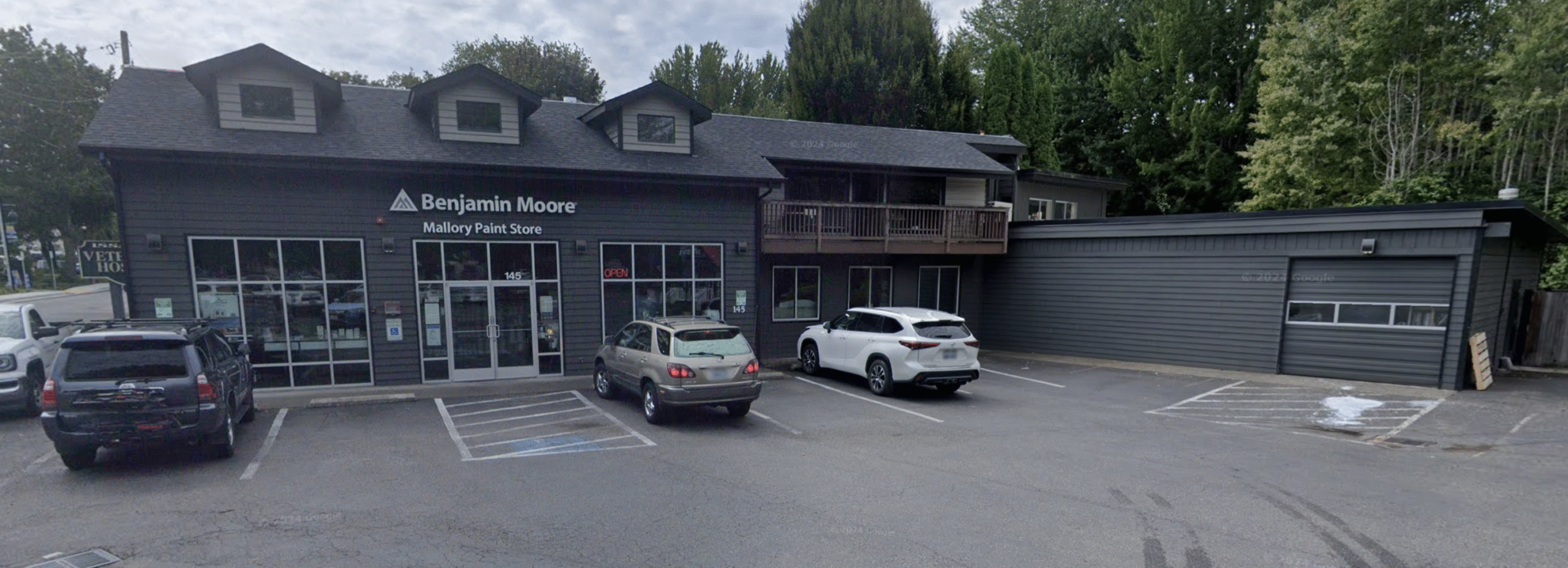
Figure 2. Napa St and 29th Ave, current office of Cloning & Associates LLC, Sep 2021. Source: Google Earth
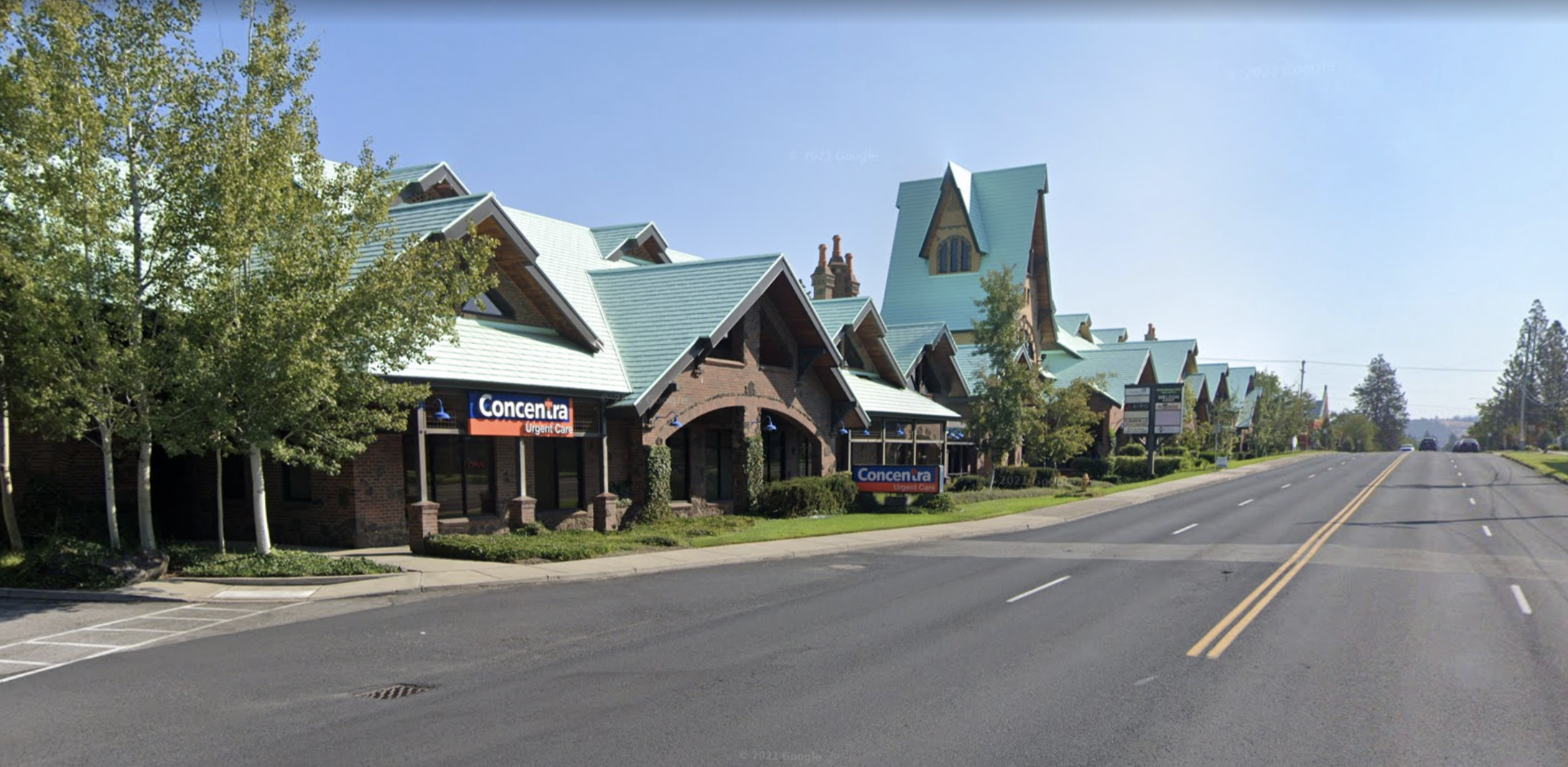
Table of Authorities
Cases
Anderson v. City of Issaquah, 70 Wash. App. 64, 851 P.2d 744 (1993).
Barry & Barry, Inc. v. Dep’t of Motor Vehicles, 81 Wash. 2d 155, 500 P.2d 540 (1972).
Kelo v. City of New London, 545 U.S. 469 (2005).
Mugler v. Kansas, 123 U.S. 623 (1887).
Pinecrest Homeowners Ass’n v. Glen A. Cloninger & Assocs., 151 Wash. 2d 279, 87 P.3d 1176 (2004).
Polygon Corp. v. Seattle, 90 Wash. 2d 59, 578 P.2d 1309 (1978).
Victoria Tower P’ship v. Seattle, 59 Wash. App. 592, 800 P.2d 380 (1990).
Village of Euclid v. Ambler Realty Co., 272 U.S. 365 (1926).
Statute
Administrative Procedure Act, 5 U.S.C. §§ 551–559 (1946).
Journal Articles
Karen Engemann et al., Residential Green Space in Childhood Is Associated with Lower Risk of Psychiatric Disorders from Adolescence into Adulthood, 116 Proc. Nat’l Acad. Sci. 5188 (2019), https://doi.org/10.1073/pnas.1807504116.
Roksana Filipowska, Hannah Weinberg-Wolf & Anastasia Vaghenas, Being Present with Art: Mindful and Interactive Engagement with Art Lowers Stress While Increasing Attention and Belonging, 49 J. Museum Educ. 334 (2024), https://doi.org/10.1080/10598650.2023.2217568.
Book
Kevin Lynch, The Image of the City (1960).
Website
A Crisis of Belonging, Harv. Grad. Sch. of Educ. (Mar. 3, 2023), https://www.gse.harvard.edu/ideas/edcast/23/03/crisis-belonging.
Selected Works